“HUNTER”
  “PHOENIX”
  “CHARIOT”
  “SPARTAN”
  “SCOUT”
  “VIPER”
  “BLACK OPS”

Why Construction Crews in Colorado Are Turning to AI for Theft Prevention
Construction Crime Trends in Colorado
Colorado’s surge in construction has brought with it an unwelcome parallel—more frequent job site theft and vandalism. From Denver’s Front Range expansion to the oilfield and utility projects in the Western Slope, stolen tools and machinery are cutting into project budgets statewide. The National Insurance Crime Bureau lists Colorado among the western states with consistent year-over-year growth in equipment theft, particularly near high-traffic corridors such as I-25, I-70, and I-76.
Contractors across Denver, Colorado Springs, and Fort Collins report repeated losses of copper wiring, catalytic converters, and portable generators. Remote mountain builds face different risks—unattended machinery parked overnight in isolated valleys, long travel times for response, and limited power for conventional cameras. Together, these conditions make continuous surveillance essential to controlling losses.
Why Is Construction Theft Increasing in Colorado?
Colorado’s mix of urban density and open rural terrain creates a broad attack surface. Rapid housing development, major transportation projects, and renewable-energy construction have expanded equipment inventories faster than security infrastructure. Many sites operate beyond city limits, where local patrol resources are thin and lighting is minimal.
Fluctuating metal prices and rising demand for diesel add further incentive. As supply chains tighten, even small thefts—fuel drums, wiring spools, or battery banks—can stop work for days while replacements are sourced.
Main Drivers Behind Colorado’s Theft Trend
- Rapid project growth across the Front Range corridor
- High resale value for copper and diesel components
- Minimal after-hours supervision on multi-acre builds
- Snow or fog reducing visibility for guards and cameras
- Accessible freeway networks enabling fast movement of stolen goods
Which Colorado Regions Are Most Affected?
Theft clusters follow population and highway density. Denver and Aurora experience frequent tool trailer and generator theft. The Colorado Springs region reports recurring copper and equipment loss tied to road-widening projects. Northern counties around Fort Collins see tool and material theft at commercial builds along the I-25 expansion zone. In western Colorado, oil and gas support sites near Grand Junction and Rifle face diesel and parts theft from unattended yards.
Mountain towns along I-70—particularly Summit and Eagle Counties—face opportunistic theft during resort-area off-seasons when fewer crews are present and access roads remain open.
Regional Risk Overview
- Denver Metro – tool trailer and generator theft from fenced lots
- Colorado Springs – copper wire theft from lighting and utility work
- Fort Collins – overnight losses near logistics hubs
- Western Slope – diesel and parts theft at energy service sites
- Mountain corridor – off-season break-ins at storage yards
What Equipment and Materials Are Stolen Most Often?
Colorado incidents concentrate around items that are compact, valuable, and fuel-based. Portable generators, catalytic converters, and diesel tanks top the list. In urban zones, tool trailers are common targets because they store thousands of dollars in equipment but are often left hitched on-site overnight.
Frequent Targets and Recommended Protection
| Asset | Threat | Suggested Surveillance |
|---|---|---|
| Tool trailers | Forced entry or tow-away | Fixed camera with strobe deterrent |
| Copper wiring | Cutting and resale | Thermal camera with AI motion alert |
| Portable generators | Towed after hours | PTZ camera with two-way audio |
| Fuel storage | Siphoning or puncture theft | Virtual line breach detection |
How Can Contractors Secure Remote or Mountain Sites?
Many Colorado job sites sit miles from electrical service or cell coverage. SentryPODS systems operate autonomously using solar-battery power and hybrid cellular or satellite connectivity. Each unit provides full 360° PTZ coverage, long-range zoom, and AI-based analytics to detect and classify motion even through snowfall or low-light conditions.
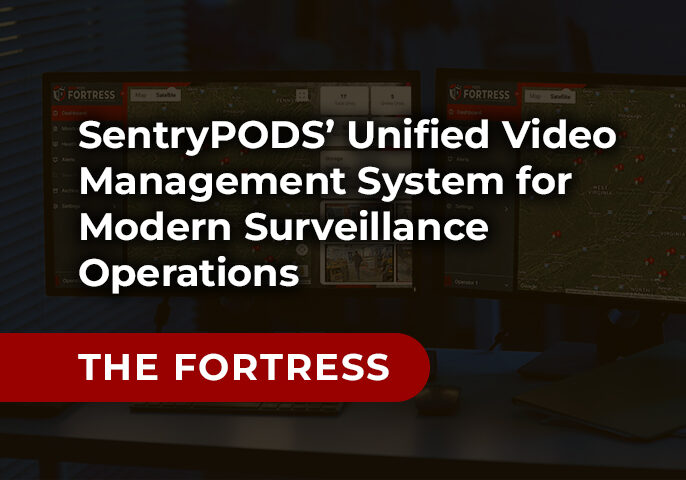
Through The Fortress VMS, supervisors in Denver or regional offices can view live feeds, manage alerts, and store evidence without visiting the site. Units can be moved easily between projects, allowing year-round protection from mountain passes to plains construction zones.
Key Benefits for Colorado Environments
- Cold-rated solar and battery systems for winter reliability
- AI motion filtering through snow or glare
- Satellite fallback for remote valleys
- Portable design for seasonal redeployment
- Cloud storage with GPS-verified incident logs
Why Is AI Detection Valuable in Colorado’s Climate?
Snow, fog, and wildlife often trigger false alerts on standard motion sensors. AI analytics distinguish between temperature shifts, animal activity, and actual human intrusion, ensuring that security teams receive only relevant notifications. This is crucial when monitoring multiple sites remotely during winter storms.
AI-based virtual boundaries also help maintain compliance for restricted zones such as fuel depots or equipment yards, sending instant alerts to managers when breached.
Operational Advantages
- Reduced false alarms caused by weather
- Faster verification for police response
- Higher evidentiary value through automated tagging
When Do Most Construction Thefts Occur in Colorado?
Reports from law-enforcement and insurance sources show peaks between 10 p.m. and 5 a.m., especially during weekends and holidays. Winter months see increased theft because shorter daylight hours leave longer unsupervised periods. In resort counties, theft often occurs during the off-season when storage lots are left idle.
Timing-Based Prevention Tips
- Arm AI detection before final shift departure
- Use motion-triggered floodlights around key assets
- Adjust alert schedules seasonally as daylight hours change
- Perform random live talk-downs through audio deterrents
How Should Contractors Manage Evidence and Claims?
Accurate footage shortens investigation time. The Fortress VMS embeds time, GPS coordinates, and device ID into every file, ensuring admissibility. Quick sharing of secure video links helps coordinate with police and insurance adjusters without physical data transfers.
Evidence Management Steps
- Save relevant clips immediately after alert review
- Retain all footage for at least 90 days
- Record incident details—time, asset type, camera ID—in a digital log
What Surveillance Layout Works Best for Colorado Projects?
Layered coverage is essential. Position one PTZ tower near the site center for panoramic view, with fixed units monitoring fuel storage, tool trailers, and access roads. LPR cameras should capture all vehicles entering or exiting via main gates. In snowy regions, mount cameras high enough to remain clear of plowed drifts and draped tarps.
Recommended Setup
- 1 PTZ camera covering the full yard
- 2-3 fixed units guarding key assets
- LPR camera at gate or haul road
- Audio horn tied to AI alerts
- Solar-battery array sized for 5-day autonomy
Can Colorado’s Construction Theft Problem Be Reduced?
Yes. With AI-enabled, wire-free surveillance, contractors can achieve near-continuous coverage despite power gaps, mountain terrain, or winter conditions. Proactive monitoring prevents small losses from becoming major delays. The result is safer, more predictable project delivery across Colorado’s growing construction economy.
Learn more about construction security cameras and wire-free monitoring systems designed for Colorado’s challenging mix of urban, rural, and alpine job sites.
Construction Crime Trends Across The USA
- Alabama Construction Crime Trends
- Alaska Construction Crime Trends
- Arizona Construction Crime Trends
- Arkansas Construction Crime Trends
- California Construction Crime Trends
- Colorado Construction Crime Trends
- Connecticut Construction Crime Trends
- Delaware Construction Crime Trends
- Florida Construction Crime Trends
- Georgia Construction Crime Trends
- Hawaii Construction Crime Trends
- Idaho Construction Crime Trends
- Illinois Construction Crime Trends
- Indiana Construction Crime Trends
- Iowa Construction Crime Trends
- Kansas Construction Crime Trends
- Kentucky Construction Crime Trends
- Louisiana Construction Crime Trends
- Maine Construction Crime Trends
- Maryland Construction Crime Trends
- Massachusetts Construction Crime Trends
- Michigan Construction Crime Trends
- Minnesota Construction Crime Trends
- Mississippi Construction Crime Trends
- Missouri Construction Crime Trends
- Montana Construction Crime Trends
- Nebraska Construction Crime Trends
- Nevada Construction Crime Trends
- New Hampshire Construction Crime Trends
- New Jersey Construction Crime Trends
- New Mexico Construction Crime Trends
- New York Construction Crime Trends
- North Carolina Construction Crime Trends
- North Dakota Construction Crime Trends
- Ohio Construction Crime Trends
- Oklahoma Construction Crime Trends
- Oregon Construction Crime Trends
- Pennsylvania Construction Crime Trends
- Rhode Island Construction Crime Trends
- South Carolina Construction Crime Trends
- South Dakota Construction Crime Trends
- Tennessee Construction Crime Trends
- Texas Construction Crime Trends
- Utah Construction Crime Trends
- Vermont Construction Crime Trends
- Virginia Construction Crime Trends
- Washington Construction Crime Trends
- West Virginia Construction Crime Trends
- Wisconsin Construction Crime Trends
- Wyoming Construction Crime Trends