How Remote Job Sites in Alaska Became Prime Targets for Equipment Theft
Construction Crime Trends in Alaska
Alaska’s construction industry faces a unique and growing problem: theft and vandalism at remote job sites scattered across vast, unmonitored terrain. From Anchorage’s urban development to the oil and gas infrastructure of the North Slope, stolen materials and heavy equipment now account for millions in lost revenue each year. The National Insurance Crime Bureau and regional law enforcement agencies have noted increasing reports of copper theft, catalytic converter removal, and missing tools across isolated worksites where physical oversight is limited by distance and weather.
Unlike more populated states, Alaska’s remoteness magnifies every vulnerability. A single missing generator or excavator can halt production for days due to long resupply timelines and logistical delays. Thieves exploit darkness, long winter nights, and minimal patrol coverage to access valuable materials. Contractors working outside of Anchorage, Fairbanks, and Kenai frequently face the same challenge—large footprints, limited power, and long gaps between site visits.
Why Are Construction Sites in Alaska So Exposed to Theft?
Several geographical and logistical realities drive Alaska’s exposure. Job sites are often temporary and scattered across hundreds of miles. Transporting surveillance systems or hiring security guards for such distances is rarely practical. Meanwhile, critical materials like copper, steel, and diesel fuel maintain high resale value in regional markets, incentivizing opportunistic theft even in harsh environments.
Long shipping lead times also mean that lost equipment cannot be replaced quickly. The result is not only financial loss but also costly downtime for energy and infrastructure projects operating on narrow seasonal windows.
Core Factors Behind Alaska’s Vulnerability
- Remote job locations with minimal human presence
- Limited law enforcement coverage outside major boroughs
- Extreme daylight imbalance creating long dark periods in winter
- High resale value of metals and portable generators
- Seasonal construction schedules compressing asset use
Which Parts of Alaska Experience the Most Construction Crime?
Theft reports cluster near logistics hubs and along major highway routes. The Anchorage bowl and surrounding industrial zones see the most consistent activity, largely due to dense contracting activity and accessible storage yards. Fairbanks and Kenai follow, where heavy equipment theft often coincides with seasonal projects. In the state’s north, the Dalton Highway corridor—linking to Prudhoe Bay—presents logistical risks for oilfield support operations, particularly when assets are staged unattended for extended periods.
Coastal regions and ports used for resource transport also experience theft, mainly from unsecured staging areas or temporary fuel depots. Rural and tundra-based builds may seem safer, but they often lack lighting or connectivity, creating extended unobserved windows between maintenance visits.
Regional Theft Observations
- Anchorage – highest overall theft reports and tool trailer losses
- Fairbanks – frequent copper and fuel theft during roadwork seasons
- Kenai Peninsula – opportunistic night theft near coastal projects
- Dalton Highway corridor – unattended equipment exposed along transit paths
What Assets Are Most Commonly Stolen in Alaska’s Construction Sector?
Portable, valuable, and fuel-dependent assets dominate Alaska theft reports. Thieves target items that can be loaded quickly and transported over long distances without surveillance detection. Diesel, copper wiring, catalytic converters, and power tools are the top categories. In rural projects, solar lighting units and generators are often stolen because they are left unguarded overnight.
Primary Targets and Recommended Countermeasures
| Asset Type | Common Threat | Suggested Surveillance Setup |
|---|---|---|
| Portable generators | Towed or carried away under cover of darkness | PTZ camera with 360° motion coverage |
| Fuel storage tanks | Siphoning or puncture theft | Thermal camera + AI motion trigger |
| Copper wiring and cabling | Cutting and scrap resale | Fixed camera with strobe deterrent |
| Heavy equipment | Unauthorized use or relocation | License Plate Recognition (LPR) system for entry tracking |
How Can Alaska Contractors Overcome Power and Connectivity Challenges?
Power shortages are a defining issue for remote surveillance in Alaska. Many worksites operate generators solely during active hours, leaving no power source at night. SentryPODS units bypass that limitation through integrated solar and battery systems, maintaining full functionality in off-grid environments. When cellular networks are unavailable, satellite backhaul ensures continuous monitoring even in the Arctic Circle.
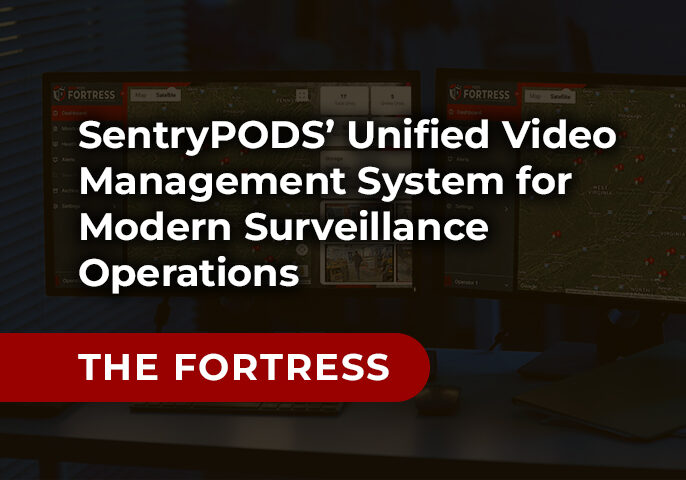
Each unit can be deployed by a two-person crew in under an hour, enabling fast rotation between project stages. The Fortress VMS interface allows security personnel in Anchorage or out-of-state offices to view live feeds, manage alerts, and store verified incident logs without requiring on-site staff.
Technology Features Tailored for Alaska Conditions
- Solar array and cold-rated battery backup
- AI motion detection resilient to snow glare and fog
- Satellite or cellular hybrid connection
- Two-way audio deterrent for live response
- Quick redeployment to new job locations
Why Is AI Surveillance Especially Useful in Alaska?
AI-based detection distinguishes between human and animal motion—essential in regions where wildlife regularly enters work zones. Systems such as SentryPODS’ virtual line breach detection reduce false alarms while ensuring alerts are sent instantly for verified human activity. This precision allows limited security teams to cover vast distances effectively.
Because most theft in Alaska occurs during late-night hours when visibility is low, AI motion classification ensures meaningful alerts instead of continuous false triggers from snow, fog, or wildlife. Recorded footage with GPS tagging supports law enforcement investigations, even when incidents occur hundreds of miles from the nearest precinct.
Advantages of AI Over Traditional Surveillance
- Fewer false alerts caused by animals or weather
- Faster verification for law enforcement coordination
- Enhanced evidentiary integrity with timestamped metadata
When Does Construction Theft Most Commonly Occur in Alaska?
Statewide reports indicate peaks between midnight and 5 a.m., when crews are off duty and power systems are offline. Theft frequency also increases during transition months—April through June and September through October—when seasonal projects ramp up or shut down. In these windows, equipment is frequently staged outdoors awaiting transport, presenting prime opportunities for theft.
Operational Precautions
- Arm surveillance zones immediately after daily shutdown
- Install lighting near storage and fueling areas even if temporary
- Relocate mobile surveillance towers with each project phase
- Audit security footage weekly to verify coverage
How Should Alaska Contractors Document Theft or Vandalism?
Evidence handling is particularly important in Alaska due to the vast distance between sites and responding officers. Digital verification through The Fortress VMS creates chain-of-custody integrity by embedding timestamps, coordinates, and audit logs in every export. This structure meets insurer documentation requirements and supports law enforcement follow-up without requiring in-person retrieval.
Reporting Best Practices
- Capture 2–3 minutes of pre- and post-incident footage
- Retain footage for 90 days to allow claim processing
- Maintain a digital register of incidents for trend analysis
What Surveillance Layout Works Best for Alaska’s Harsh Conditions?
Start with a central PTZ unit mounted on a telescoping mast for panoramic visibility. Add fixed cameras near power generation units and fuel storage areas. Each system should be paired with solar capacity large enough to handle limited winter sunlight. Where feasible, deploy one LPR camera at access roads to log service vehicles and deliveries. The combination of panoramic coverage and AI analytics creates deterrence even in subzero, low-light environments.
Recommended Configuration Summary
- 1 central PTZ camera for full perimeter coverage
- 2–3 fixed cameras at storage, fuel, and trailer points
- Satellite uplink for remote feed transmission
- Cold-weather solar module with reinforced battery housing
Can Alaska’s Construction Theft Problem Be Reduced?
Yes. By combining autonomous surveillance systems, AI analytics, and cloud verification tools, Alaska’s contractors can maintain security coverage even in unstaffed or off-grid environments. Continuous visibility—rather than physical guards—is the most efficient deterrent across long distances. With proper planning and mobile deployment, construction theft losses can be minimized across the state’s infrastructure and resource sectors.
Learn more about construction surveillance solutions and wire-free camera systems engineered to perform in remote, low-temperature job sites across Alaska.
Construction Crime Trends Across The USA
- Alabama Construction Crime Trends
- Alaska Construction Crime Trends
- Arizona Construction Crime Trends
- Arkansas Construction Crime Trends
- California Construction Crime Trends
- Colorado Construction Crime Trends
- Connecticut Construction Crime Trends
- Delaware Construction Crime Trends
- Florida Construction Crime Trends
- Georgia Construction Crime Trends
- Hawaii Construction Crime Trends
- Idaho Construction Crime Trends
- Illinois Construction Crime Trends
- Indiana Construction Crime Trends
- Iowa Construction Crime Trends
- Kansas Construction Crime Trends
- Kentucky Construction Crime Trends
- Louisiana Construction Crime Trends
- Maine Construction Crime Trends
- Maryland Construction Crime Trends
- Massachusetts Construction Crime Trends
- Michigan Construction Crime Trends
- Minnesota Construction Crime Trends
- Mississippi Construction Crime Trends
- Missouri Construction Crime Trends
- Montana Construction Crime Trends
- Nebraska Construction Crime Trends
- Nevada Construction Crime Trends
- New Hampshire Construction Crime Trends
- New Jersey Construction Crime Trends
- New Mexico Construction Crime Trends
- New York Construction Crime Trends
- North Carolina Construction Crime Trends
- North Dakota Construction Crime Trends
- Ohio Construction Crime Trends
- Oklahoma Construction Crime Trends
- Oregon Construction Crime Trends
- Pennsylvania Construction Crime Trends
- Rhode Island Construction Crime Trends
- South Carolina Construction Crime Trends
- South Dakota Construction Crime Trends
- Tennessee Construction Crime Trends
- Texas Construction Crime Trends
- Utah Construction Crime Trends
- Vermont Construction Crime Trends
- Virginia Construction Crime Trends
- Washington Construction Crime Trends
- West Virginia Construction Crime Trends
- Wisconsin Construction Crime Trends
- Wyoming Construction Crime Trends